Cahuita National Park Snorkeling
Tours & tickets

Hand-picked by our editors — only the best 5 experiences from 12 reviewed.

Open today 08:00–16:00
Attendance: Moderate — dry season conditions
Current conditions favor clear visibility for a cahuita national park scuba diving tour.
Free cancellation Instant confirmation Mobile voucher Verified partner Book now, pay later
Tickets

Choose your ticket

Verified partners for every tour, free cancellation where available, and instant confirmation on every booking.

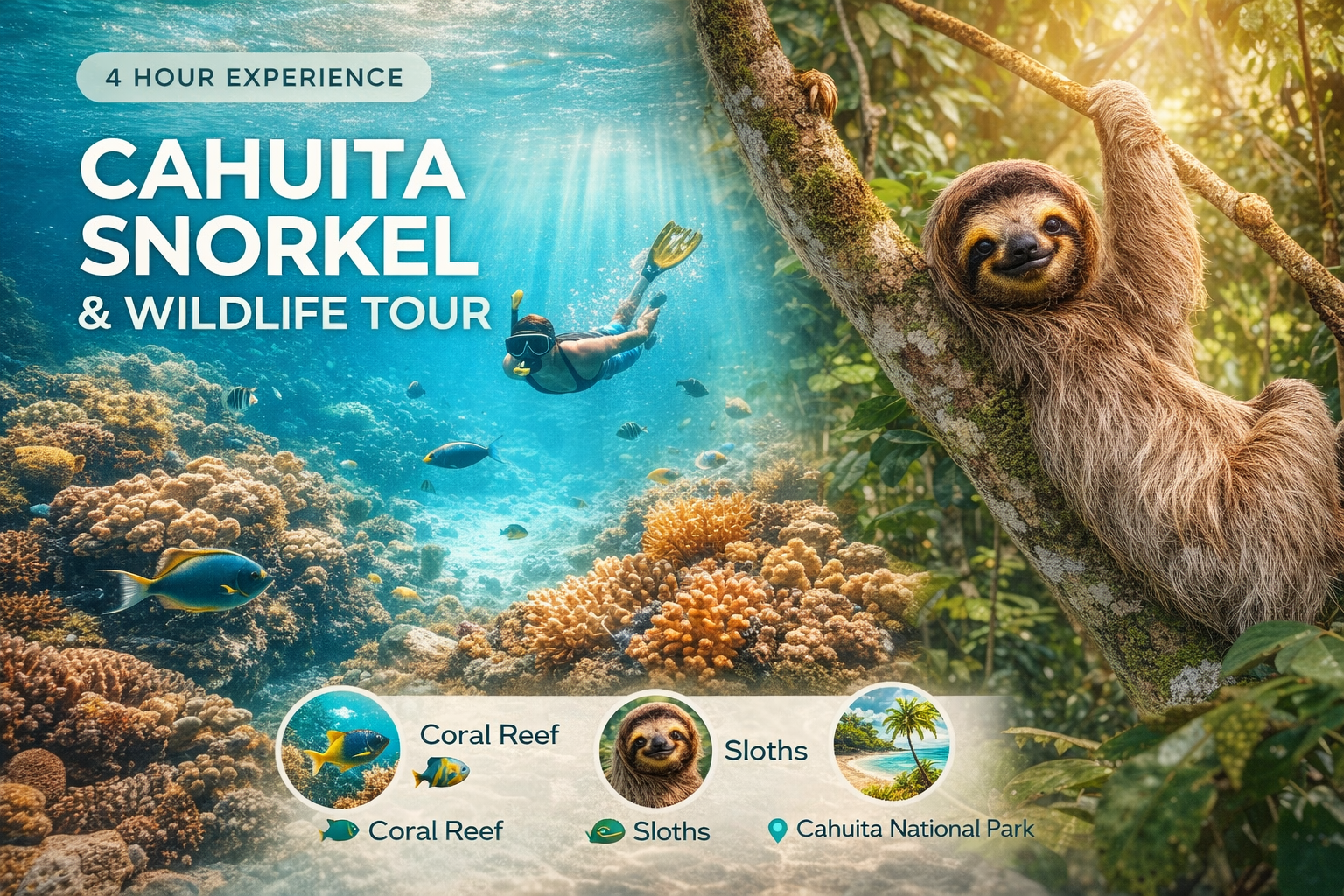
Cahuita Snorkel & Rainforest Wildlife Tour 4 hr
Standard Entry

Cahuita Snorkel & Rainforest Wildlife Tour

4.9 (55)
€76
per person
Instant Mobile voucher Flexible — change up to 24h

Dive into coral reefs, spot sloths and monkeys, then hike through lush Caribbean jungle—all in one morning.

Reserve
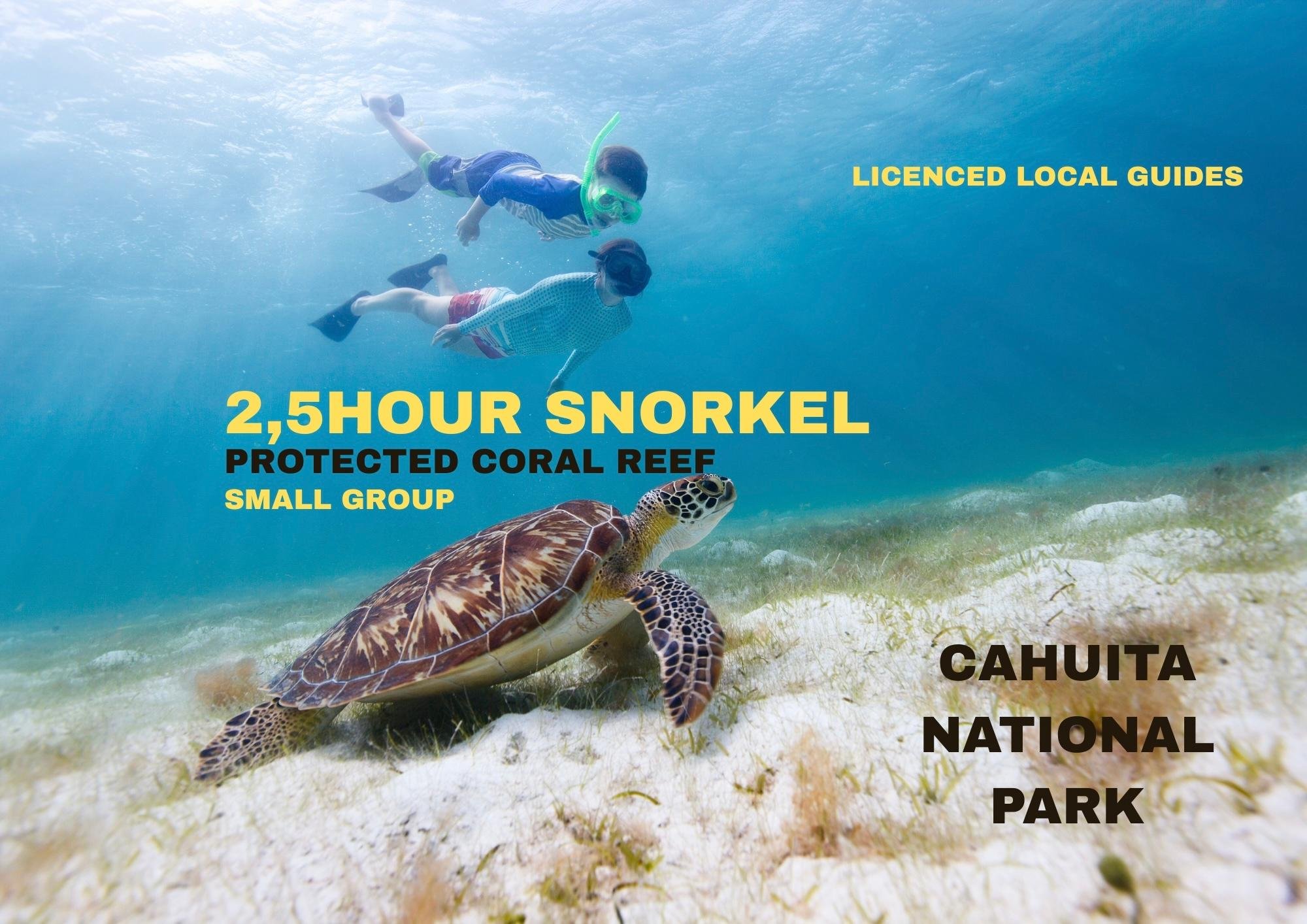
Caribbean Reef Snorkeling at Cahuita National Park 2 hr 30 min
Standard Entry

Caribbean Reef Snorkeling at Cahuita National Park

4.7 (119)
€42
per person
Instant Mobile voucher Flexible — change up to 24h

Swim with sea turtles and tropical fish in protected Caribbean waters with expert local guides

Reserve

Prices from verified partners. Availability updates in real time at checkout. Free cancellation policies apply where shown.

Highlights

What you'll see inside the attraction

The landmarks, rooms, and views travelers on this tour remember — all visible on a single visit.

Cahuita Reef

The largest protected coral system in the Costa Rican Caribbean, home to brain and elkhorn corals.

Playa Blanca

A pristine white sand beach perfect for relaxing between underwater explorations.

Shipwreck Site

The remains of a colonial-era slave ship, now a popular underwater point of interest.

Coastal Rainforest Trail

An 8km path offering canopy views and frequent sightings of howler monkeys and sloths.

Puerto Vargas Ranger Station

The primary facility for entering the park's southern sector, featuring full visitor services.

Head to head

Cahuita National Park Scuba Diving vs. Gandoca-Manzanillo — Choosing Your Underwater Experience

They complement each other; most visitors who do both call the refuge the more rugged, wild alternative to the protected reefs of Cahuita. Engaging in cahuita national park scuba diving tours offers a structured look at shallow formations, while the neighboring reserve provides a raw encounter with remote marine ecosystems.

Feature Top pick Cahuita NP Gandoca-Manzanillo
Ease of access
Requires 4x4 or boat transport
Coral accessibility
Fragmented, deep-water formations
Marine biodiversity
Nurse sharks, turtles, pelagics
Crowd levels
Low to none
Guided tour necessity
Mandatory for navigation
Infrastructure
Limited, no primary facilities

Verdict: Select a cahuita national park scuba diving tour for established reef visibility, or choose the refuge if you require the isolation of a remote coastal habitat.

How your ticket works

Book your ticket in 3 steps

  1. 01

    Book online

    Choose your ticket, select your date, and reserve in under two minutes. Secure checkout handled by our verified partner.

  2. 02

    Receive your mobile voucher

    Instant confirmation by email, with a mobile voucher you can save offline. No printing, no queuing at a collection desk.

  3. 03

    Show & enter

    Arrive at the entrance, show your voucher on your phone, and walk in. Most tickets include priority or skip-the-line access.

Plan your visit

Everything you need to know before you go

Practical details for your visit straight from our verified partners — hours, access, rules, and how to get there.

Open today · 08:00–16:00
Opening Hours
08:00–16:00 daily
Address
Cahuita, Limón Province, Costa Rica
Entry Info
Puerto Vargas 5.65 USD fee; Kelly Creek donation-based
Best Time
08:00–10:00 arrival window for cahuita national park scuba diving tours
Facilities
Showers and restrooms at Kelly Creek and Puerto Vargas
Navigation
8km coastal trail connects both primary park entrances
Mon
08:00–16:00
Tue
08:00–16:00
Wed
08:00–16:00
Thu
08:00–16:00
Fri
08:00–16:00
Sat
08:00–16:00
Sun
08:00–16:00
Location

Address
Cahuita, Limón Province, Costa Rica
Facilities
Showers and restrooms at Kelly Creek and Puerto Vargas
Navigation
8km coastal trail connects both primary park entrances

Dress code

Wear light, quick-drying clothing and sturdy sandals or water shoes for rocky sections. A rash guard is recommended for your cahuita national park scuba diving excursion.

Bags & security

Keep all valuables in a secure, waterproof dry bag. Do not leave personal items unattended on the beach during your cahuita national park scuba diving session.

Photography

Underwater cameras are ideal for capturing coral formations. Please ensure your gear is secure to avoid touching the reef while using cahuita national park scuba diving tickets.

Accessibility

Trails are primarily natural and can be uneven or sandy. Assistance is recommended for those with mobility concerns when arranging a cahuita national park scuba diving visit.

What to bring

  • Refillable water bottle
  • Reef-safe sunscreen
  • Polarized sunglasses
  • Waterproof bag
  • Towel
  • Cash for park donations

Not allowed

  • Single-use plastics
  • Alcohol
  • Fishing gear
  • Spear guns
  • Feeding supplies
  • Drones
  • Pets
  • Loud speakers
  • Coral collection tools
  • Chemical sunscreens

Families & strollers

The shallow reef areas are excellent for family snorkeling experiences. Ensure children remain within designated zones during any cahuita national park scuba diving activity.

Food & drink

No commercial services exist inside the park, so carry all necessary water and snacks. Pack out all trash to help preserve the local marine ecosystem near your cahuita national park scuba diving site.

Around your visit

Everything else worth knowing

Best time to go, insider tips, nearby landmarks, and the cancellation fine print — flip through to skim what matters to you.

Cancellation policy

Flexible, no hidden fees.

Entry fees are non-refundable for individual tickets. If booking a third-party cahuita national park scuba diving tour, cancellation terms depend on the operator's specific policy.

About

The place, in context

Cahuita National Park protects 1,067 hectares of living coral reef, the most accessible stretch of Caribbean reef system remaining on Costa Rica's eastern shore. Established in 1970 as the country's third national park, Cahuita was born from local Afro-Caribbean community advocacy to halt coastal development and preserve the 240-hectare marine zone that had sustained subsistence fishing for generations. The reef extends nearly 500 meters offshore along Punta Cahuita, a limestone promontory where freshwater streams from the Talamanca foothills meet warm Caribbean currents, creating nutrient upwellings that support 35 coral species and more than 120 fish species. The underwater topography follows a shallow terrace between three and eight meters deep, ideal for snorkeling rather than technical scuba diving. Elkhorn and brain corals anchor the outer reef edge, while staghorn thickets shelter juvenile parrotfish, sergeant majors, and blue tangs in the calmer inner zones. Sea fans sway in the longshore drift. Visibility fluctuates with rainfall; the dry months between February and April offer the clearest water, often exceeding 15 meters, while the wet season from May through November stirs sediment and reduces clarity to five meters or less. The park's dual-entrance structure reflects its community origins: the Kelly Creek entrance operates on voluntary donation, honoring the original free-access agreement with Cahuita residents, while the southern Puerto Vargas gate charges a standardized conservation fee of 5.65 USD. Cahuita's marine section remains one of the few protected reef zones in Central America where visitors wade directly from the beach into coral habitat without requiring boat transport. The nine-kilometer coastal trail connects both park entrances, threading through littoral forest where three-toed sloths, howler monkeys, and green iguanas occupy the canopy above tide pools and lava rock outcrops. The trail itself traces pre-Columbian pathways used by Bribri and Cabécar communities, later widened during cacao plantation expansion in the early 20th century. Hurricane damage in 1991 and subsequent bleaching events tied to rising sea temperatures have reduced coral cover by an estimated 30 percent since the park's founding, yet ongoing reef restoration projects led by local dive operators and the Sistema Nacional de Áreas de Conservación work to stabilize remaining coral colonies and transplant fragments to degraded zones. Cahuita National Park scuba diving opportunities center on snorkeling excursions rather than compressed-air diving, given the shallow reef profile and park regulations that prohibit motorized watercraft within the marine zone to minimize propeller strikes and fuel contamination.

"Cahuita protects 240 hectares of living coral, the most accessible Caribbean reef system remaining on Costa Rica's eastern shore."
Your experience

What a tour day looks like

A step-by-step walkthrough of the visit — what you'll see, how long each stage takes, and the details that matter.

You enter through the Kelly Creek gate at eight in the morning, the air still cool under a canopy of sea grape and almond trees. The trail opens onto a crescent of gray sand where the reef begins 40 meters offshore, visible as a dark line beneath the surface. You wade in, mask and fins already on, and the water is bath-warm at 28 degrees Celsius. Within two strokes the bottom drops to three meters and the first coral heads appear: brain corals the size of washing machines, their ridges traced in neon polyps. A school of blue tangs moves past in formation, 50 fish flickering left in unison. You follow the reef edge south, parallel to shore, passing staghorn thickets where parrotfish scrape algae with audible clicks. A spotted eagle ray lifts off the sand, wings spanning a full meter. The current is negligible; you drift more than swim. At Punta Cahuita the reef curves seaward and the visibility opens to 12 meters. Elkhorn corals stand upright like antlers, their branches thick as your forearm. A nurse shark rests in a sandy channel, unmoving. After 40 minutes you circle back toward the beach, exiting where the forest meets the tide line. A troop of howler monkeys calls from the canopy above, the sound carrying across the water long after you've stepped onto dry sand.

Frequently asked

Frequently asked questions about cahuita national park scuba diving tours

Are there official cahuita national park scuba diving tickets?

There are no specific 'scuba' tickets; you pay the 5.65 USD entrance fee at the Puerto Vargas sector to access the park.

Is a guide required for cahuita national park scuba diving tours?

Yes, for the protection of the coral, you must join an authorized local guide to access the reef for any cahuita national park scuba diving or snorkeling activity.

Can I book a cahuita national park scuba diving tour independently?

You must book a cahuita national park scuba diving tour through a licensed local operator who coordinates with the park's management.

What is the best time for a cahuita national park scuba diving tour?

The best visibility for a cahuita national park scuba diving excursion occurs during the dry months of February–April and September–October.

Is the 5.65 USD fee required for all cahuita national park scuba diving visitors?

The 5.65 USD fee is fixed at the Puerto Vargas entrance, while the Kelly Creek entrance operates on a donation basis.

Are there other activities to pair with cahuita national park scuba diving?

Many visitors combine their cahuita national park scuba diving tour with a hike along the 8km coastal trail to spot sloths and monkeys.

Is there gear rental included for a cahuita national park scuba diving tour?

Authorized tour operators provide all necessary equipment for your cahuita national park scuba diving experience.

Does the park offer cahuita national park scuba diving on weekends?

Yes, the park is open 08:00–16:00 daily, and tours operate throughout the week.

What animals can I see during cahuita national park scuba diving?

You may spot nurse sharks, rays, sea turtles, and over 100 species of colorful tropical fish while on a cahuita national park scuba diving trip.